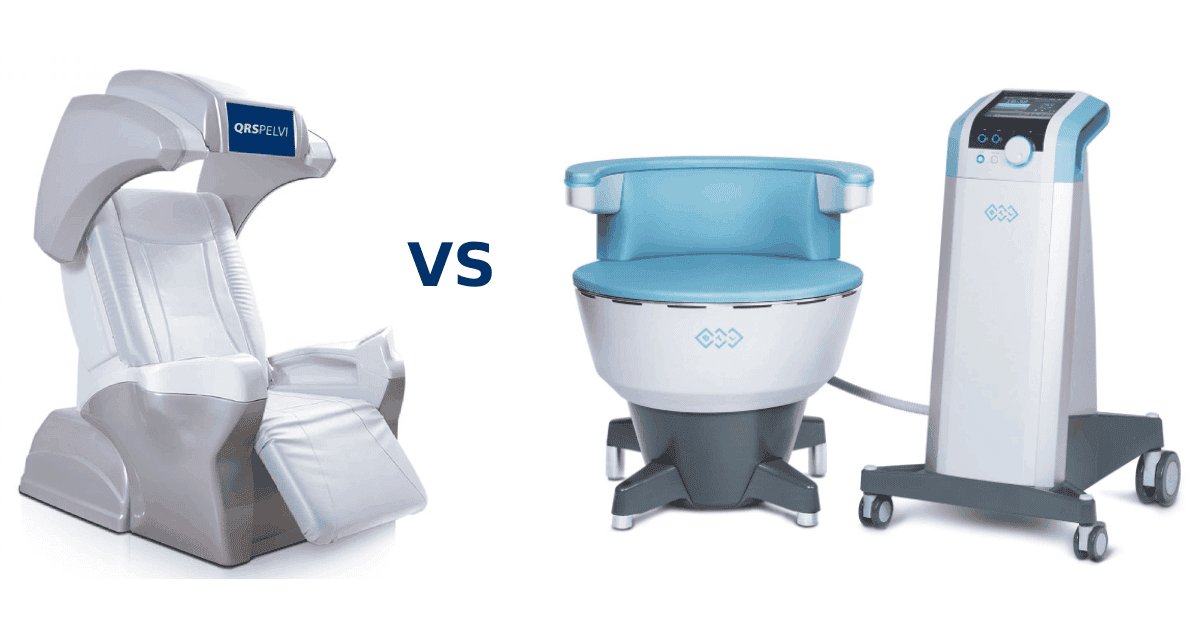
Executive Summary
Electromagnetic pelvic floor therapy has emerged as a critical tool in the conservative management of urinary incontinence and pelvic organ prolapse. While both QRS Pelvicenter and BTL Emsella employ electromagnetic stimulation, fundamental differences in field geometry, penetration depth, and physiological mechanisms yield distinct clinical profiles. This review examines these technologies through the lens of rehabilitation medicine, with particular emphasis on tissue penetration and neuromuscular activation patterns relevant to urogynecologic practice.
The Penetration Depth Imperative
Deep pelvic floor rehabilitation requires electromagnetic field penetration beyond superficial muscular layers. The pubococcygeus, iliococcygeus, and levator ani complex—critical structures in pelvic support—reside at varying depths requiring adequate field distribution.
QRS Pelvicenter's flat magnetic field achieves 150mm penetration depth, enabling comprehensive activation of the entire levator ani muscle complex and associated fascial structures. This depth specification positions it as a rehabilitation-grade device rather than an aesthetic wellness tool.
Choosing the Right Modality for Your Practice
Selecting between Flat Magnetic Stimulation and HIFEM technology depends on your primary clinical focus and patient population pathology.
The Industry Standard for Stress Urinary Incontinence
The BTL Emsella remains a benchmark in the electromagnetic pelvic floor therapy industry, supported by an extensive clinical portfolio specifically validating its efficacy in treating Stress Urinary Incontinence (SUI). With documented outcomes including 68% symptom improvement at 6 months and 87% reduction in pad use, HIFEM technology has established itself as a globally recognized standard for rapid muscle re-education and incontinence relief. For practices focused primarily on peak muscle contraction intensity, supramaximal neuromuscular activation, and rapid SUI symptom resolution, HIFEM technology represents a well-validated therapeutic approach with strong brand recognition and patient awareness.
The Specialized Solution for Pelvic Organ Prolapse
The QRS Pelvicenter is positioned as the specialized rehabilitation tool for Pelvic Organ Prolapse (POP) and comprehensive pelvic floor structural reconditioning. By utilizing Flat Magnetic Stimulation (FMS), it prioritizes electromagnetic field homogeneity and a documented 150mm penetration depth to reach the deep fascial layers, levator ani complex, and endopelvic connective tissue that constitute the anatomical foundation of pelvic organ support. This depth specification—unmatched by focal-field devices—enables activation of the pubococcygeus, iliococcygeus, and puborectalis at their full anatomical extent, addressing the structural deficits that are often the root cause of prolapse and multi-compartment pelvic floor dysfunction.
Clinical Bottom Line: Both technologies have legitimate, evidence-based applications. Choose based on your practice's dominant patient pathology—Emsella for pure incontinence, QRS for structural prolapse rehabilitation.
Core Technology Comparison
| Parameter | QRS Pelvicenter (Flat Magnetic) | BTL Emsella (HIFEM Focused) |
|---|---|---|
| Field Geometry | Flat Magnetic Stimulation (FMS) Homogeneous, uniform distribution across entire pelvic floor |
High-Intensity Focused Electromagnetic (HIFEM) Concentrated, localized field with focal intensity |
| Penetration Depth | 150mm documented Reaches deep levator ani structures |
Not specified in clinical literature Focal design may limit deep tissue engagement |
| Mechanism | Quantronic Ion Shifting + Calcium Cascade • H+ ion displacement → vascular wall acidification • Ca²⁺ release from vascular wall → intracellular influx • Activation of: macrophages, enzyme systems, NO-gas production • Neuromuscular re-education via sustained biochemical changes |
Supramaximal Muscle Contractions • Direct electromagnetic induction of muscle fibers • Rapid, high-intensity contractions • Neuromuscular re-education via mechanical stimulation |
| Muscle Activation Pattern | Uniform engagement of pubococcygeus, iliococcygeus, and entire levator complex Broader anatomical coverage |
Concentrated activation in focal region Higher intensity in limited zone |
| Session Duration | 25 minutes per session | 28-30 minutes per session |
| Treatment Protocol | 8 sessions, 2x/week over 4 weeks | 6 sessions, 2x/week over 3 weeks |
| Clinical Positioning | Rehabilitation-grade medical device Designed for urogynecology and pelvic floor dysfunction specialists |
Aesthetic wellness + medical applications Marketed across multiple specialties |
| Physiological Effects | • Vasodilation (NO-gas production) • Enzyme activation • Immune modulation (macrophage activation) • Cell differentiation • Membrane permeability enhancement |
• Neuromuscular re-education • Muscle fiber recruitment • Strength improvement |
Field Shape: Clinical Implications
📖 For a deeper technical analysis: See our comprehensive article on Homogeneous vs. Focused Electromagnetic Fields in Pelvic Floor Therapy, which examines the physics, tissue interaction patterns, and clinical implications of these two field geometries.
Flat Magnetic Field (QRS)
- Uniform Distribution: Electromagnetic field spreads evenly across the entire pelvic floor surface area
- Deep Penetration: 150mm depth ensures activation of all levator ani layers, including deep muscle fibers and connective tissue
- Comprehensive Coverage: Engages pubococcygeus, iliococcygeus, and puborectalis simultaneously
- Systemic Effects: Calcium cascade triggers multiple cellular processes beyond muscle contraction
- Ideal For: Generalized pelvic floor weakness, multi-compartment prolapse, rehabilitation-focused protocols
Focused Field (BTL Emsella)
- Concentrated Intensity: High-intensity electromagnetic energy focused on specific region
- Supramaximal Contractions: ~11,000 Kegel-equivalent contractions per session
- Rapid Muscle Fatigue: Induces maximum voluntary contraction beyond patient capability
- Direct Mechanism: Electromagnetic induction causes immediate muscle fiber depolarization
- Ideal For: Stress incontinence, targeted muscle strengthening, rapid symptom relief
Clinical Evidence & Outcomes
Key Clinical Studies Supporting Flat Magnetic Stimulation
The evidence base for Flat Magnetic Stimulation (FMS) has grown substantially with recent peer-reviewed publications demonstrating efficacy across multiple pelvic floor dysfunction domains:
🔬 Pelvic Organ Prolapse (2025)
De Vicari et al., Medicina
n=87, Stage ≤2 POP
Anatomical Outcomes (POP-Q):
- Aa: -0.3±1.2 → -0.7±1.3 (p=0.03)
- Ba: -0.3±1.3 → -0.7±1.3 (p=0.04)
- 100% compliance, zero adverse events
🔬 Stress Urinary Incontinence (2015)
Lim et al., Trials
RCT Protocol (NCT01924728)
Rigorous randomized controlled trial design for magnetic stimulation in stress urinary incontinence. Demonstrates methodological rigor in FMS research with sham-controlled design.
🔬 Anal Incontinence (2025)
Barba et al., Int J Womens Health
Prospective clinical study
Demonstrated safety and improvements in St. Mark incontinence scores and quality of life measures. Expands FMS applications beyond urinary incontinence to comprehensive pelvic floor dysfunction.
🔬 Postpartum Rehabilitation (2025)
Li et al., Int J Womens Health
RCT: FMS + PFMT (ChiCTR2400084678)
Evaluated cerebral hemodynamics and brain functional connectivity changes with FMS combined with pelvic floor muscle training. Provides neurophysiological evidence for neuromuscular re-education mechanism.
Evidence Strength: These peer-reviewed publications demonstrate FMS efficacy across the spectrum of pelvic floor disorders—from anatomical prolapse support to urinary/anal incontinence to postpartum rehabilitation. The diversity of clinical applications, combined with documented safety profile and patient satisfaction, positions FMS as a versatile rehabilitation tool backed by growing clinical evidence.
BTL Emsella Clinical Evidence
Manufacturer-Supported Data
Urinary Incontinence Focus
Based on clinical studies and user reports
Comparative Efficacy:
- 3x more effective than electrical stimulation
- Equivalent to 11,000+ Kegels per session
- Strong evidence base for UI treatment
Independent Clinical Studies
Braga et al. (2022), J Clin Med
3 Tesla functional magnetic stimulation for female urinary incontinence
Lukanović et al. (2021), J Clin Med
Systematic review of magnetic stimulation effectiveness
Note: While HIFEM technology has substantial evidence for urinary incontinence, peer-reviewed data specifically addressing pelvic organ prolapse anatomical outcomes (POP-Q measurements) is limited compared to FMS literature.
Clinical Patient Selection & Protocol Guidance
Ideal Candidates for QRS Pelvicenter
- Stage I & II POP: Patients seeking non-surgical structural support with documented anatomical improvement potential
- Multi-Compartment Prolapse: When anterior, posterior, and/or apical support deficits require comprehensive pelvic floor activation
- Postpartum Recovery: Early intervention for levator ani trauma with focus on deep tissue rehabilitation
- Mixed Incontinence with POP: Patients requiring both muscle tone and deep fascial stimulation for combined pathology
- Post-Surgical Rehabilitation: Pelvic floor reconditioning following reconstructive surgery
- Elderly or Medically Complex: Patients who need gentle, comprehensive stimulation with systemic vascular benefits
- Failed Conservative Therapy: When traditional PFMT has been inadequate due to poor compliance or insufficient depth activation
Contraindications (NOT Suitable For:)
Absolute Contraindications:
- Pregnancy (any trimester)
- Cardiac pacemakers or implanted cardioverter-defibrillators (ICDs)
- Electronic or metal implants in the pelvic region
- Active pelvic malignancy or history of pelvic irradiation
- Copper IUD or metal-containing intrauterine devices
Relative Contraindications (Assess Risk-Benefit):
- Recent pelvic surgery (< 6 months post-op)
- Active pelvic infection or inflammation
- Severe cardiovascular disease (consult cardiology)
- Uncontrolled bleeding disorders
- Stage III-IV prolapse (may require surgical intervention first)
Comparative Clinical Outcomes
Why 150mm Penetration Depth Matters
Anatomical Rationale: The levator ani muscle complex comprises multiple layers at varying depths from the perineal surface. Superficial perineal muscles (bulbospongiosus, ischiocavernosus) lie at 20-40mm, while the pubococcygeus and iliococcygeus—the primary structural supports in prolapse prevention—extend to depths of 80-120mm. Deep pelvic floor structures including the coccygeus and endopelvic fascia require field penetration exceeding 100mm for effective stimulation.
Clinical Consequence: Insufficient penetration depth results in preferential activation of superficial muscles while leaving deep support structures understimulated. For rehabilitation of multi-compartment prolapse or severe pelvic floor dysfunction, comprehensive depth activation is non-negotiable.
Competitive Advantage: Most electromagnetic pelvic floor devices do not specify penetration depth in their technical documentation. The 150mm specification of QRS Pelvicenter represents a measurable commitment to rehabilitation-grade performance, distinguishing it from wellness-oriented devices.
Physiological Mechanisms: Beyond Muscle Contraction
QRS Pelvicenter in Action: Visual Demonstration
Watch how the QRS Pelvicenter's flat magnetic field technology delivers comprehensive pelvic floor stimulation with 150mm penetration depth.
Note: This video demonstrates the clinical application of flat magnetic field technology, showing patient positioning and the treatment process that delivers the calcium cascade mechanism described below.
The Calcium Cascade (QRS-Specific)
QRS technology induces a multi-step physiological cascade initiated by electromagnetic ion displacement:
1. Ion Displacement
H⁺ ions from blood pushed against vascular walls create acidic microenvironment, releasing Ca²⁺ ions into cellular fluid
2. Macrophage Activation
Enhanced immune function, pathogen clearance, and tissue debris removal
3. Enzyme Modulation
Acceleration of metabolic processes through enzyme activation/inhibition
4. NO Production
Nitrogen monoxide (NO) generation → vasodilation, improved tissue perfusion
5. Cell Differentiation
Stimulation of healthy cell division and tissue-specific cellular differentiation
6. Membrane Permeability
Enhanced ion exchange through membrane gate opening
Clinical Implication: The calcium cascade provides a multi-factorial therapeutic mechanism that extends beyond simple muscle strengthening to include vascular improvement, metabolic optimization, and tissue regeneration—particularly relevant for complex pelvic floor dysfunction with comorbid conditions.
Protocol Comparison
| Treatment Parameter | QRS Pelvicenter | BTL Emsella |
|---|---|---|
| Initial Course | 8 sessions over 4 weeks | 6 sessions over 3 weeks |
| Session Frequency | 2x per week | 2x per week |
| Session Duration | 25 minutes | 28-30 minutes |
| Total Treatment Time | 200 minutes (3.3 hours) | 168-180 minutes (2.8-3 hours) |
| Patient Position | Seated, fully clothed | Seated, fully clothed |
| Anesthesia Required | None | None |
| Maintenance | Variable, typically as needed | Every 3-12 months |
| Patient Sensation | Tingling, gentle muscle contractions | Tingling, intense muscle contractions |
| Contraindications | Both: Pregnancy, cardiac pacemaker, metal implants, IUD/copper coil, pelvic malignancy, prior pelvic irradiation | |
Clinical Indications: Differentiated Applications
QRS Pelvicenter Optimal Use Cases
- Mild to Moderate POP (Stage 1-2)
Particularly anterior compartment prolapse - Multi-Compartment Dysfunction
Uniform field distribution addresses multiple prolapse sites - Post-Surgical Rehabilitation
Comprehensive pelvic floor reconditioning - Chronic Pelvic Pain with Levator Hypertonicity
Calcium cascade mechanism aids tissue normalization - Complex Medical Comorbidities
Systemic effects (vasodilation, metabolic optimization) beneficial for patients with multiple conditions - Elderly or Deconditioned Patients
Gentle, uniform stimulation better tolerated
BTL Emsella Optimal Use Cases
- Stress Urinary Incontinence
Strong evidence base for UI symptom reduction - Post-Partum Incontinence
Rapid muscle re-education in younger patients - Athletes with Pelvic Floor Dysfunction
High-intensity training may appeal to athletic population - Mixed UI (Stress + Urge)
Documented efficacy across incontinence subtypes - Patients Seeking Rapid Results
Shorter treatment course (3 weeks vs 4 weeks) - Sexual Dysfunction (Secondary Indication)
Marketed for intimate wellness improvement
Comparative Efficacy Analysis
| Outcome Measure | QRS Pelvicenter Evidence | BTL Emsella Evidence |
|---|---|---|
| Anatomical POP Improvement | Documented Significant Aa/Ba point improvement (p<0.05) Based on peer-reviewed RCT data |
Not primary indication Limited published data on POP-Q outcomes |
| Urinary Incontinence | Multiple studies showing efficacy in UI Flat magnetic stimulation demonstrated in systematic reviews |
Strong evidence base 68% symptom improvement at 6 months 87% pad use reduction |
| Patient Satisfaction | 90.8% reported improvement 37.9% "much/very much improved" Zero adverse events |
High satisfaction reported Improvement typically noted within 2-3 sessions |
| Compliance & Adherence | 100% treatment compliance in clinical studies Gentle stimulation well-tolerated |
High adherence reported No downtime facilitates scheduling |
| Safety Profile | Both: Excellent safety profile, no reported serious adverse events in clinical literature | |
Technical Specifications for Practice Acquisition
Considerations for Urogynecology Practices
Emsella: Best suited for practices focused on incontinence (particularly stress UI), intimate wellness, broader aesthetic offerings
Emsella: Wellness + medical hybrid—appeals to broader patient demographic seeking non-invasive solutions
Emsella: Depth not specified in technical literature; focal design suggests concentrated rather than deep field
Emsella: Extensive clinical data for UI, strong manufacturer-supported evidence, broader clinical adoption
Emsella: Strong consumer brand recognition, extensive marketing presence
Emsella: Cross-specialty appeal (urogynecology, aesthetics, wellness, urology)
Clinical Decision Matrix
Choose QRS Pelvicenter When:
- Primary patient population includes pelvic organ prolapse (Stage 1-2)
- Practice emphasizes rehabilitation medicine over aesthetic wellness
- Deep tissue penetration is clinically necessary (multi-compartment dysfunction, severe levator weakness)
- Patient profile includes elderly, medically complex, or post-surgical cases requiring gentle but comprehensive stimulation
- Practice values documented penetration depth specifications and uniform field distribution
- Calcium cascade mechanism aligns with practice philosophy of systemic pelvic health optimization
Choose BTL Emsella When:
- Primary patient population seeks treatment for urinary incontinence (stress, urge, mixed)
- Practice includes aesthetic or wellness services alongside medical treatment
- Strong brand recognition and patient self-referral are important for practice growth
- Rapid symptom relief (2-3 sessions) is a key patient expectation
- High-intensity, supramaximal contractions align with patient preferences (younger, athletic population)
- Shorter treatment course (3 weeks vs 4 weeks) is advantageous for scheduling
Consider Complementary Use When:
- Practice serves diverse pelvic floor patient population with varying needs
- Sequential therapy protocols may benefit from different mechanisms (e.g., Emsella for initial UI control, QRS for subsequent POP rehabilitation)
- Insurance reimbursement or patient payment models support technology differentiation
When BTL Emsella May Be Preferable: A Balanced Clinical Perspective
Professional integrity requires acknowledging that no single technology is optimal for all patients. BTL Emsella offers distinct clinical advantages in specific scenarios:
Emsella's Clinical Strengths
- Rapid Symptom Relief: Patients report noticeable improvements within 2-3 sessions—ideal for those seeking quick results
- Pure Stress Incontinence: Extensive evidence base specifically for isolated SUI without structural prolapse
- Shorter Treatment Course: 6 sessions over 3 weeks vs. 8 sessions over 4 weeks—better for scheduling constraints
- Brand Recognition: High consumer awareness drives patient self-referral and practice marketing ROI
- Athletic Population: High-intensity supramaximal contractions may appeal to younger, active patients
- Established Reimbursement: Well-documented insurance coding pathways for UI treatment
When to Recommend Emsella Over QRS
- Isolated Stress UI: No concurrent prolapse or multi-compartment dysfunction
- Postpartum UI (without prolapse): Young mothers seeking rapid return to activity
- Patient Preference: When patient requests Emsella specifically after research
- Time-Sensitive Cases: Patients who cannot commit to 4-week protocols
- Practice Marketing: When building aesthetic/wellness patient base alongside medical services
- Cash-Pay Model: Emsella's brand recognition supports premium pricing in aesthetic markets
Clinical Guidance: Technology Selection Framework
The decision between technologies should be driven by patient pathology, not device availability:
| Clinical Presentation | First-Line Recommendation | Rationale |
|---|---|---|
| Stage I-II POP ± UI | QRS Pelvicenter | Documented POP-Q anatomical improvement; 150mm depth addresses structural deficits |
| Isolated Stress UI | Either Technology | Both effective; choose based on patient preference, scheduling, or reimbursement |
| Urge UI / OAB | BTL Emsella | Stronger evidence base for detrusor overactivity; rapid symptom control |
| Mixed UI + POP | QRS Pelvicenter | Addresses both incontinence and structural support; comprehensive field coverage |
| Post-Surgical Rehab | QRS Pelvicenter | Gentle, uniform stimulation; vascular benefits via calcium cascade |
| Postpartum (no prolapse) | BTL Emsella | Rapid return to continence; shorter treatment course appeals to new mothers |
Professional Perspective: This comparison is not intended to diminish BTL Emsella's clinical value. Rather, it clarifies that field geometry and penetration depth create distinct therapeutic profiles. Practices serving complex pelvic floor dysfunction benefit from understanding these differences to optimize patient outcomes. In an ideal scenario, a comprehensive urogynecology practice might offer both technologies, selecting the appropriate tool for each patient's specific pathology.
Critical Technical Differentiators
| Technical Aspect | Clinical Impact | QRS Advantage | Emsella Advantage |
|---|---|---|---|
| Field Geometry | Determines which muscle layers are activated and at what intensity | ✓ Uniform coverage of entire pelvic floor | ✓ Concentrated intensity in focal zone |
| Penetration Depth | Ensures deep levator ani activation (100-120mm required for complete engagement) | ✓ 150mm documented | − Not specified |
| Physiological Mechanism | Broader systemic effects may benefit complex medical cases | ✓ Calcium cascade with vascular/metabolic effects | ✓ Direct neuromuscular re-education |
| Evidence for POP | Anatomical improvement documentation critical for rehabilitation protocols | ✓ Peer-reviewed POP-Q data | − Limited POP-specific studies |
| Evidence for UI | Strong evidence base supports clinical adoption and insurance reimbursement | ✓ Multiple systematic reviews | ✓ Extensive manufacturer + clinical data |
| Treatment Intensity | Patient tolerance and comfort during extended courses | ✓ Gentle, well-tolerated | ✓ High-intensity but tolerable |
| Brand Positioning | Influences patient self-referral and practice marketing strategy | − Rehabilitation-focused (lower consumer awareness) | ✓ Strong consumer brand recognition |
Anatomical Coverage: Field Distribution Modeling
Flat Magnetic Field (QRS Pelvicenter): The homogeneous electromagnetic field generated by flat magnetic stimulation distributes evenly across the pelvic floor surface, creating a broad activation zone that engages:
- Superficial perineal muscles (20-40mm depth): bulbospongiosus, ischiocavernosus
- Mid-depth muscles (60-90mm): superficial pubococcygeus, superficial transverse perineal
- Deep pelvic floor structures (100-150mm): deep pubococcygeus, iliococcygeus, coccygeus, puborectalis
- Endopelvic fascia and connective tissue support networks
Focused Field (BTL Emsella): The HIFEM technology concentrates electromagnetic energy in a specific region, creating high-intensity contractions in the focal zone. This produces supramaximal muscle activation that exceeds voluntary contraction capability but with potentially reduced activation of peripheral structures outside the focal region.
Rehabilitation Perspective: For comprehensive pelvic floor rehabilitation—particularly in cases of multi-compartment prolapse, generalized levator weakness, or complex dysfunction—uniform deep penetration may provide superior anatomical restoration compared to focal high-intensity stimulation. Conversely, for isolated stress incontinence without structural prolapse, concentrated intensity may achieve faster symptomatic relief.
The Calcium Cascade vs. Direct Neuromuscular Mechanism
| Physiological Effect | QRS Calcium Cascade | Emsella Direct Stimulation |
|---|---|---|
| Primary Action | Ion displacement → Ca²⁺ influx → cellular cascade | Electromagnetic induction → motor neuron depolarization |
| Muscle Strengthening | Indirect via calcium-mediated protein synthesis and cell differentiation | Direct via supramaximal contractions and fiber recruitment |
| Vascular Effects | NO production → vasodilation → improved perfusion | Indirect through increased metabolic demand |
| Metabolic Optimization | Enzyme activation, membrane permeability, fatty acid normalization | Limited to exercise-induced metabolic changes |
| Immune Modulation | Macrophage activation, pathogen clearance | Not documented |
| Tissue Regeneration | Cell division stimulation, differentiation enhancement | Indirect through mechanical loading |
| Time to Effect | Gradual, cumulative (2-4 weeks) | Rapid (2-3 sessions for noticeable improvement) |
Rehabilitation Medicine Perspective
The fundamental difference between these technologies lies not merely in branding or marketing positioning, but in their core electromagnetic field architecture and resulting physiological mechanisms. QRS Pelvicenter's flat magnetic design with 150mm penetration depth represents a rehabilitation-first approach, engineered for comprehensive pelvic floor reconstruction in complex medical cases. The calcium cascade mechanism provides multi-factorial therapeutic benefits extending beyond muscle strengthening to include vascular optimization, metabolic enhancement, and tissue regeneration.
BTL Emsella's focused high-intensity electromagnetic field excels at rapid muscle re-education through supramaximal contractions, making it particularly effective for straightforward incontinence cases where aggressive muscle strengthening is the primary therapeutic goal.
For rehabilitation clinics treating complex pelvic floor dysfunction: Penetration depth, field uniformity, and systemic physiological effects should take precedence over brand recognition. The 150mm specification is not merely a technical detail—it represents the difference between superficial muscle activation and comprehensive deep pelvic floor rehabilitation.
Clinical Outcomes: Head-to-Head Comparison
| Outcome Domain | QRS Pelvicenter | BTL Emsella | Clinical Interpretation |
|---|---|---|---|
| Anterior Prolapse (POP-Q Aa/Ba) | Significant improvement (p<0.05) | No published data | QRS demonstrates measurable anatomical benefit for prolapse rehabilitation |
| Stress Incontinence | Effective per systematic reviews | 68% improvement at 6 months | Both effective; Emsella has more extensive UI-specific evidence |
| Patient-Reported Improvement | 90.8% (any improvement) 37.9% (much/very much improved) |
High satisfaction reported across studies | Both demonstrate strong subjective benefit |
| Pad Use Reduction | Not primary outcome in POP studies | 87% reported reduction | Emsella strong for quantifiable UI outcomes |
| Treatment Tolerance | 100% compliance, zero adverse events | High compliance, minimal adverse events | Both exceptionally well-tolerated |
| Time to Symptom Relief | Gradual improvement over 4-week course | Noticeable within 2-3 sessions | Emsella faster for symptomatic relief; QRS provides sustained anatomical change |
Cost-Effectiveness & Practice Integration
QRS Pelvicenter Economic Model
- Patient Volume: May appeal to smaller patient volume with complex cases
- Reimbursement: Rehabilitation focus may align better with insurance coding for POP treatment
- Marketing: Requires physician-driven education; less consumer self-referral
- Staff Training: Emphasis on clinical assessment and POP-Q measurements
- ROI Timeline: Dependent on building referral network within rehab medicine community
BTL Emsella Economic Model
- Patient Volume: Strong consumer awareness drives higher self-referral volume
- Reimbursement: Well-established coding for UI treatment; may be more cash-pay in aesthetic settings
- Marketing: Benefits from brand recognition and consumer advertising
- Staff Training: Straightforward protocols, less assessment-intensive
- ROI Timeline: Faster patient volume ramp-up due to brand awareness
Recommendations for Urogynecology Practices
Device Selection Framework
⚕️ Clinical Philosophy: The "best" device is the one that matches your patient population's dominant pathology. This analysis is not a dismissal of BTL Emsella—it's an acknowledgment that different electromagnetic field geometries serve different clinical needs. Evidence-based practice requires matching technology to pathology, not marketing to convenience.
For Practices Primarily Treating Pelvic Organ Prolapse:
QRS Pelvicenter offers documented anatomical improvement in POP-Q measurements, uniform field distribution for multi-compartment dysfunction, and the critical 150mm penetration depth needed for deep levator ani rehabilitation. The calcium cascade mechanism provides systemic benefits that may enhance tissue quality and vascular health in aging pelvic floor structures.
For Practices Primarily Treating Urinary Incontinence:
BTL Emsella's extensive evidence base for UI, rapid symptom improvement, and strong brand recognition make it an excellent choice. The supramaximal contraction mechanism directly addresses the neuromuscular deficits underlying stress and urge incontinence.
For Comprehensive Pelvic Floor Practices:
Consider the patient demographics, clinical complexity, and practice philosophy. Rehabilitation-oriented practices treating post-surgical patients, elderly populations, or complex multi-compartment dysfunction may find QRS's rehabilitation-grade specifications more aligned with clinical needs. Practices with strong aesthetic/wellness components or high-volume UI-focused patient flow may benefit from Emsella's market position and rapid results.
The Penetration Depth Question
When evaluating electromagnetic pelvic floor devices, always ask for documented penetration depth specifications. Manufacturers who cannot or will not provide this data may be offering superficial stimulation devices rather than rehabilitation-grade equipment. The 150mm depth achieved by QRS flat magnetic technology is a measurable commitment to comprehensive deep tissue activation—a specification that separates rehabilitation medicine from aesthetic wellness applications.
Interested in QRS Pelvicenter for Your Practice?
Learn how the 150mm penetration depth and flat magnetic field technology can enhance your pelvic floor rehabilitation protocols. Our team can provide detailed specifications, clinical support, and practice integration guidance.
Serving urogynecology practices, pelvic floor rehabilitation centers, and women's health clinics nationwide
Contraindications & Safety Considerations
| Contraindication | Both Devices | Additional Notes |
|---|---|---|
| Absolute | • Pregnancy • Cardiac pacemaker/defibrillator • Pelvic malignancy • Metal implants in treatment field |
Standard electromagnetic therapy contraindications apply to both technologies |
| Relative | • IUD/copper coil • Prior pelvic irradiation • Active infection |
Assess risk-benefit on case-by-case basis |
| Cancer Safety | QRS has documented studies showing no stimulation of cancer cell growth (healthy cell division only). Both devices should not be used in presence of active malignancy. | |
Future Directions & Research Needs
While both technologies demonstrate clinical efficacy, several research gaps warrant attention:
- Direct Comparative Trials: No published head-to-head studies exist comparing flat vs. focused electromagnetic stimulation for identical patient populations
- Long-Term Durability: Both technologies require extended follow-up studies (12+ months) to assess durability of anatomical and symptomatic improvements
- Optimal Treatment Protocols: Session frequency, intensity titration, and maintenance schedules remain empirically derived rather than rigorously optimized
- Penetration Depth Validation: Independent verification of electromagnetic field penetration depths through imaging or direct tissue measurement would strengthen technical claims
- Cost-Effectiveness Analysis: Comparative health economics data needed to inform practice acquisition decisions and reimbursement policy
- Combination Therapy: Potential synergy between electromagnetic stimulation and other conservative modalities (PFMT, pessaries, hormonal therapy) requires investigation
Conclusion
The choice between QRS Pelvicenter and BTL Emsella should be driven by practice patient demographics, clinical complexity, and therapeutic philosophy rather than brand recognition alone. For urogynecology practices focused on rehabilitation of pelvic organ prolapse, post-surgical reconditioning, or complex multi-factorial pelvic floor dysfunction, QRS Pelvicenter's flat magnetic field with documented 150mm penetration depth offers technical specifications aligned with comprehensive rehabilitation protocols.
The electromagnetic field geometry—flat versus focused—is not merely a technical detail but a fundamental determinant of which anatomical structures receive therapeutic stimulation. Practices treating deep pelvic floor pathology require devices engineered for depth and breadth of coverage, not just high-intensity focal stimulation.
Balanced Clinical Perspective: This comparison acknowledges BTL Emsella's strengths in stress incontinence, rapid symptom relief, and brand recognition while highlighting QRS Pelvicenter's advantages in structural prolapse rehabilitation and deep tissue activation. Both technologies have legitimate clinical applications. The recommendation for QRS Pelvicenter in prolapse cases is based on documented anatomical outcomes (POP-Q improvements), not marketing preference. Conversely, for pure stress incontinence without structural deficits, either technology may be appropriate based on practice workflow and patient preference.
Key Takeaway for Clinicians: When evaluating electromagnetic pelvic floor devices, prioritize documented penetration depth, field distribution characteristics, and peer-reviewed anatomical outcome data over aesthetic branding and consumer marketing. The 150mm penetration specification distinguishes rehabilitation-grade equipment from wellness-oriented alternatives. For complex pelvic floor dysfunction requiring comprehensive neuromuscular re-education and deep levator ani activation, field geometry and penetration depth are non-negotiable clinical requirements.
Selected References
- De Vicari D, Barba M, Cola A, et al. Flat Magnetic Stimulation in the Conservative Management of Mild Pelvic Organ Prolapse: A Retrospective Observational Study. Medicina. 2025;61:2198. https://doi.org/10.3390/medicina61122198
- Lim R, Liong ML, Leong WS, Khan NAK, Yuen KH. Magnetic stimulation for stress urinary incontinence: study protocol for a randomized controlled trial. Trials. 2015;16:279. ClinicalTrials.gov: NCT01924728. Full text available
- Barba M, Cola A, Re I, et al. Flat Magnetic Stimulation for Anal Incontinence: A Prospective Study. Int J Womens Health. 2025;17:1115-1122. PMC11868735
- Li Y, Chen Y, Wang X, et al. Effects of Functional Magnetic Stimulation Combined with Pelvic Floor Muscle Training on Cerebral Hemodynamics and Brain Functional Connectivity in Women with Postpartum Pelvic Floor Dysfunction. Int J Womens Health. 2025. ChiCTR Registration: ChiCTR2400084678. PubMed
- Barba M, Cola A, Rezzan G, et al. Flat Magnetic Stimulation for Urge Urinary Incontinence. Medicina. 2023;59:1999.
- Frigerio M, Barba M, Cola A, et al. Flat Magnetic Stimulation for Stress Urinary Incontinence: A Prospective Comparison Study. Bioengineering. 2023;10:295.
- Lukanović D, Kunič T, Batkoska M, et al. Effectiveness of Magnetic Stimulation in the Treatment of Urinary Incontinence: A Systematic Review and Results of Our Study. J Clin Med. 2021;10:5210.
- Braga A, Castronovo F, Caccia G, et al. Efficacy of 3 Tesla Functional Magnetic Stimulation for the Treatment of Female Urinary Incontinence. J Clin Med. 2022;11:2805.
- BTL Aesthetics. EMSELLA Clinical Data and Research Portfolio. Available at: https://btlaesthetics.com
- Hagen S, Stark D, Glazener C, et al. Individualised pelvic floor muscle training in women with pelvic organ prolapse (POPPY): A multicentre randomised controlled trial. Lancet. 2014;383:796-806.
- QRS International. Quantronic Technology: Calcium Cascade Mechanism. Technical Documentation.
Clinical Practice Points
- Request penetration depth specifications from all electromagnetic device manufacturers
- Match field geometry (flat vs. focused) to primary patient pathology (POP vs. UI)
- Consider physiological mechanism alignment with practice therapeutic philosophy
- Evaluate published anatomical outcome data rather than relying solely on symptom improvement
- Assess patient population tolerance for treatment intensity and duration
- Consider practice economic model (insurance-based rehabilitation vs. cash-pay wellness)
- Examine evidence quality: peer-reviewed publications vs. manufacturer-sponsored data